Nasturtium (Tropaeolum majus)
설명
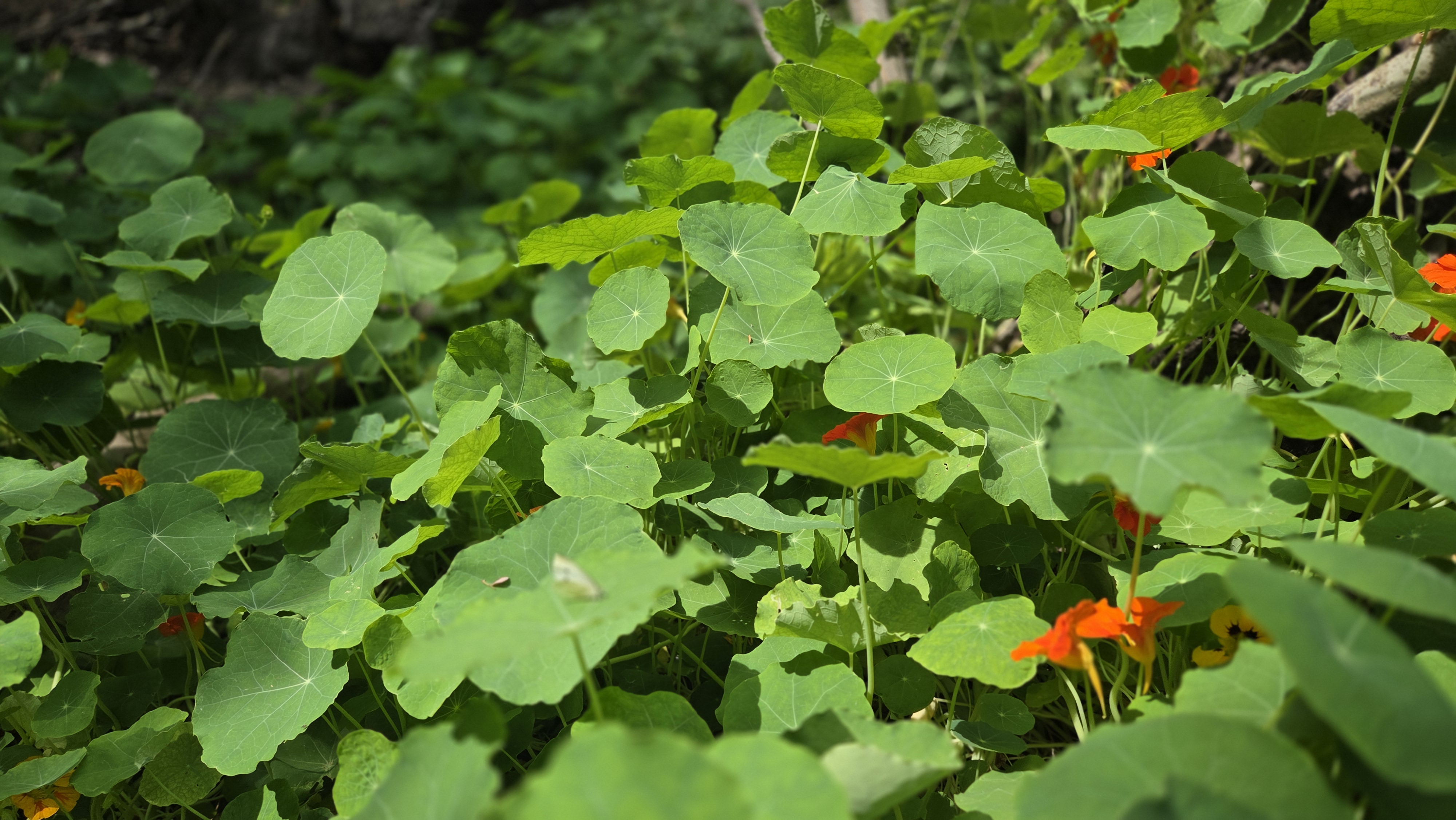
From the photo, the plant appears to be nasturtium (Tropaeolum majus). This is a robust, scrambling or climbing annual that is widely grown for its striking, rounded, almost circular foliage and vibrant flowers. The leaves are distinctive: almost perfectly round or kidney-shaped with long, slender petioles that attach near the center of the blade, and the veins radiate outward like spokes on a wheel. The leaves are a bright to medium green and sit on wiry, trailing stems. In the image you can also glimpse brilliant orange blooms peeking through the foliage, which is another hallmark of many nasturtium cultivars. Beside their beauty, nasturtiums are valued for being edible and highly versatile in garden design, from ground cover to hanging baskets to climbers along trellises. Here is a thorough guide to understanding this plant’s biology, how to grow and care for it, and how to use it in the garden and kitchen. Botanical notes and basic characteristics: Nasturtium is Tropaeolum majus, a member of the Tropaeolaceae family. It is native to South America and is cultivated worldwide as an ornamental annual in temperate regions. The plant’s growth habit is typically trailing or climbing, depending on the variety and support provided. Leaves are peltate, meaning the petiole attaches at or near the center of the blade rather than at the edge. Leaves are round to shield-shaped, often 3–7 cm (about 1–3 inches) in diameter, though some varieties create larger or smaller leaves. Veins radiate from a central point, giving the leaf an elegant, almost star-like look. Flowers occur singly on slender stalks and display a five-petaled, funnel-shaped corolla. Colors vary by cultivar but commonly include orange, yellow, and red tones; some cultivars also show bicolor patterns. The edible aspect is a strong distinguishing feature: both leaves and flowers have a peppery, slightly zesty flavor reminiscent of watercress. The seeds, when mature, form in pods that can be quite large and are sometimes used as a peppercorn substitute in pickling or seasoning. Cultural requirements and care: - Light and temperature: Nasturtiums perform best in full sun, where they can receive at least 6 hours of direct light per day. They tolerate light shade but flowering may be reduced in very shady spots. They are generally frost-tensitive and are treated as annuals in temperate climates. In very hot climates, they may benefit from some afternoon shade and consistent moisture to prevent scorching. - Soil and planting: They are famously unfussy about soil quality and will thrive in average to poor, well-drained soil. In fact, overly rich soil can promote lush leaf growth at the expense of flowering. If you want dense, prolific bloom, avoid heavy fertilizers, especially those high in nitrogen. The soil should drain well to avoid root rot or crown rot. Plant nasturtium seeds directly in the garden after the danger of frost if you live in a region with cold springs; germination typically occurs in 7–14 days. Soaking seeds overnight before sowing can speed germination. Spacing depends on the growth habit: climbers or trailing varieties typically need a support like a trellis or cage and can be spaced about 25–40 cm (10–16 inches) apart to give each plant space to spread. - Watering: Keep the soil evenly moist but not waterlogged. Nasturtiums prefer steady moisture in hot weather, but they will tolerate some drought once established. Overwatering or poorly drained soil can lead to root problems. Mulching helps conserve moisture and keeps roots cooler in warm months. - Fertilization: These plants are light feeders. A light side-dressing of a balanced, low-nitrogen fertilizer or compost worked into the top layer at planting time is usually sufficient. Avoid heavy, high-nitrogen feeding that encourages leafy growth over flowers. - Pruning and training: For bushier, more floriferous plants, pinch back the growing tips when the vines are a few inches tall. Regularly remove spent flowers to encourage continuous blooming, particularly in long-season climates. If you are growing climbing nasturtiums, provide a sturdy trellis or fence and gently guide the vines; they will climb with little encouragement. - Temperature and pests: Nasturtiums are fairly pest-resistant and often act as a trap crop for aphids on nearby plants. They can still be affected by aphids, caterpillars, slugs, and some beetles. Insecticidal soap, strong water sprays, or hand-picking can control aphids. Slugs and snails may be a problem in damp beds; morning watering and mulching with diatomaceous earth or gravel can help. Powdery mildew can occur in crowded, humid conditions; ensure good air circulation and avoid overhead watering. Pollinators and ecological value: The bright flowers are attractive to bees, butterflies, and hoverflies, making nasturtiums a valuable plant for pollinator-friendly gardens. The edible nature of leaves and flowers adds to their allure, encouraging gardeners to plant them where pollinators are active. Some gardeners also plant nasturtiums as a trap crop to protect more valuable ornamentals or vegetables from pests, though this practice should be planned carefully, as it can influence pest dynamics in the entire bed. Edible uses and culinary notes: Both leaves and flowers are edible and have a peppery, tangy flavor. Young leaves are milder, while mature leaves and especially flowers have a stronger bite. The leaves can be added raw to salads, used as edible garnish, or stuffed with soft cheeses or herbed spreads. The flowers are often used to decorate salads, deviled eggs, or sushi platters, and they add a pleasant peppery zing. Seeds can be pickled or used as a peppercorn substitute in small amounts; however, the seeds can be rather hard and spicy, so they are typically used sparingly. Cooking nasturtium leaves or flowers briefly can soften their bite while preserving color. For decorative purposes, use a mix of colors and sizes to create striking edible arrangements. As with many edible ornamentals, start with small amounts to gauge tolerance for flavor in sensitive individuals, and avoid large quantities if you have never eaten the plant before. Garden design and landscape potential: Nasturtium’s versatility is a major strength. It can form a trailing ground cover on borders, spill over into containers, drape over a low wall, or climb a trellis to create a vertical green screen. The compact, round leaves lend a soft, almost water-lily-like texture to plantings, while the bright flowers provide bold pops of color from late spring through late summer in favorable climates. When used as a ground cover, nasturtium can help suppress weeds and provide a living mulch, though its vigorous growth means it may outpace slow-growing neighbors if not monitored. In edible landscapes, combining nasturtiums with lettuce, herbs, or tomatoes makes for both aesthetic appeal and pest-management synergy, since the presence of nasturtiums can attract beneficial insects and, in some cases, divert aphids from more valuable crops. Propagation and longevity: If you desire a quick start, sow seeds directly into the garden in spring after the last frost, or start indoors a few weeks ahead in a warm, bright area and transplant after hardening off. Nasturtiums typically behave as annuals in temperate regions, but in areas with mild winters (where frost is rare or absent), some varieties can behave as short-lived perennials. Deadheading spent flowers throughout the season encourages continuous bloom. In climates with cold winters, you can collect seeds from mature pods to plant next year, though self-sowing is common if you let some seed pods mature. Potential cautions and compatibility: While nasturtiums are generally safe and edible for humans, some people may be sensitive to the peppery compounds in leaves and flowers. Always introduce new edible plants gradually to gauge personal tolerance. They are non-toxic to pets in typical garden exposure, but excessive ingestion of any ornamental plant material is not advised. In terms of companion planting, nasturtiums can be beneficial near vegetables like tomatoes, beans, and other crops by attracting pests away or by attracting pollinators; however, their vigorous spread means they can compete for space and nutrients, so plan beds accordingly. Overall impression and practical tips: If your goal is a cheerful, easy-to-care-for plant that doubles as edible garnish and a beautiful ground cover or climber, nasturtium is an excellent choice. It thrives in containers if given bright light and good drainage, and it can fill a fence line or border with a shimmering carpet of rounded leaves and orange flowers. When selecting varieties, look for trailing or climbing forms if you want cascading color and the ability to cover a trellis; bush forms are better for low borders and massed plantings. Remember to plant in well-drained soil, avoid over-fertilizing, and water regularly during dry spells. Pinch or trim as needed to shape the plant, and deadhead spent blossoms to prolong flowering. With these practices, nasturtiums will enrich your garden with dynamic texture, edible leaves and flowers, and a reliable splash of color that glows in sunlit spots.
식별 시간
2026년 5월 10일
안내
식집사의 기능은 AI를 사용하고 있어 부정확 할 수 있습니다. 단순 재미와 참고용으로만 사용해주세요.