진단 결과
설명
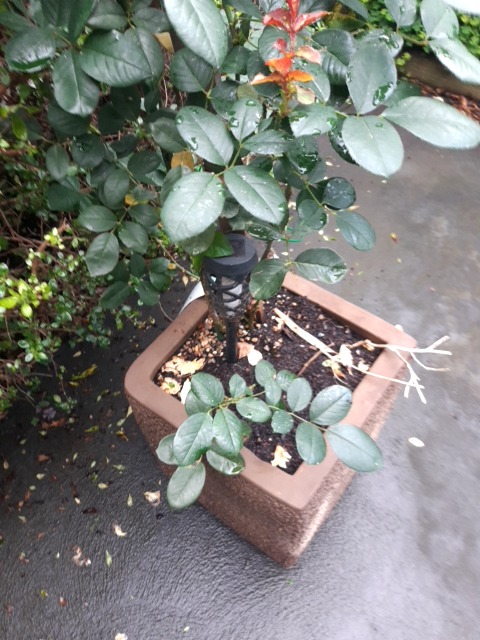
The photo shows a potted rose with glossy dark green leaves and some minor spotting that could indicate a foliar fungal issue. Rose black spot is a common fungal disease on roses, especially in humid or wet conditions. It typically appears as round or oblong black or purple-brown spots on the upper surfaces of leaves, often surrounded by a yellow halo, and can lead to premature defoliation if untreated. The disease overwinters in leaf litter and can spread during periods of leaf wetness or rain. In a container setup, poor air circulation and repeated leaf wetness from overhead watering increase the risk. While the image does not show bold spot symptoms clearly, the overall leaf health and the presence of new growth in a humid setting warrant considering black spot as a likely cause and addressing cultural and chemical controls accordingly.
해결 방법
1. Immediate cultural cleanup and monitoring: Begin with sanitation and pruning to reduce sources of infection. Carefully inspect all leaves, removing any that show signs of black spots or yellowing and discarding them in a sealed bag rather than composting. Rake or sweep up fallen leaves from the pot and surrounding area, as the fungus can overwinter in leaf litter. After pruning, sanitize your pruning shears with a 10% bleach solution (or alcohol) to prevent spreading spores to healthy canes. Improve air circulation by trimming congested growth, remove crowded foliage around the crown, and ensure the plant has enough space in the pot for light and airflow. Do not water the leaves; switch to bottom watering or drip irrigation that wets only the soil. Water early in the day so any moisture on foliage dries quickly, reducing the window for infection. Consider repotting the plant into fresh, well-draining potting mix and ensuring the container has ample drainage holes. In containers, avoid overloading with organic mulch at the crown where excess moisture can linger. Maintain a consistent watering schedule that keeps soil evenly moist but never soggy, and monitor the plant daily for new spots or yellowing. Regular cleaning and attention to leaf litter in the future will help break the disease cycle and keep the plant healthier through the growing season.
안내
식집사의 기능은 AI를 사용하고 있어 부정확 할 수 있습니다. 단순 재미와 참고용으로만 사용해주세요.