진단 결과
설명
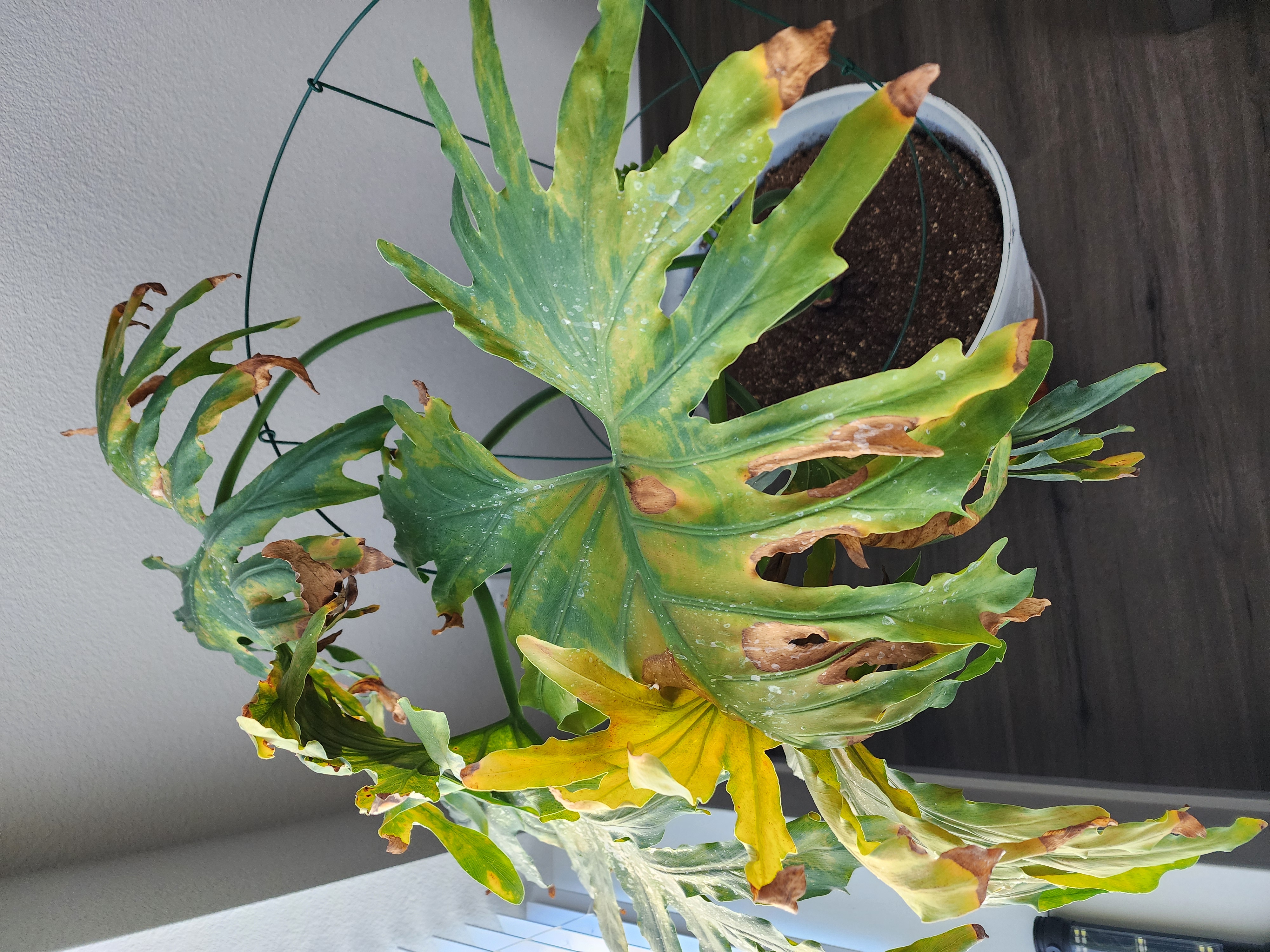
The plant appears to be a Monstera deliciosa showing signs of physiological stress rather than a clear infectious disease. Symptoms include yellowing of older leaves, brown, crispy margins and tips, and general leaf tissue necrosis along the edges. Some leaves also show pale speckling which can be mineral salt deposits from fertilizer buildup or evaporated water residues. The plant is placed indoors near a bright window, which can lead to either sun scorch if exposed to direct sun or dehydration if the air is dry and watering is infrequent. There is no obvious pattern of irregular spots or vascular streaks that would suggest a fungal or bacterial infection, nor visible pests in the photo. This condition is most consistent with environmental stress: inconsistent watering (over- or under-watering), low humidity, possible fertilizer salt buildup, and potential sun/scorch exposure. Addressing water, humidity, light, and salt buildup will typically restore healthier growth and prevent further leaf damage.
해결 방법
3. Pest management and disease-proofing with root health focus: While the visible symptoms on the leaves point to environmental stress, it is essential to rule out pests and root diseases that can mimic or compound leaf damage. Inspect the undersides of leaves and the leaf axils for pests such as scale, mealybugs, or spider mites; these pests can sap vigor and lead to leaf browning and gradual decline. If you spot pests, treat promptly with a gentle systemic or contact treatment appropriate for houseplants: use a spray of insecticidal soap or neem oil, following the product label directions, and repeat after 7–10 days to catch any life stages. Wipe leaf surfaces with a damp cloth to remove residue and discourage pests. If pest signs are strong or if you notice soggy, foul-smelling soil or persistent wilting, consider a root health check: gently remove the plant from the pot, inspect the roots for dark, mushy tissue, and trim any affected roots with sterilized scissors. Repot into fresh, clean potting mix and a clean pot to minimize re-infestation. After repotting, water with plain room-temperature water, allow proper drainage, and place the plant back in a stable environment with consistent light and humidity. Integrate a routine of occasional leaf cleaning, careful watering, and salt flushes to prevent buildup. Finally, keep plants away from hot air vents or direct, intense sun that can worsen scorch symptoms. This comprehensive approach—pest monitoring, root health assessment, soil refreshment, and environmental stabilization—reduces stressors on the plant and supports sustainable recovery, reducing the likelihood of recurrent leaf scorch and promoting healthy, vigorous growth.
안내
식집사의 기능은 AI를 사용하고 있어 부정확 할 수 있습니다. 단순 재미와 참고용으로만 사용해주세요.