Euphorbia tirucalli (Pencil Cactus)
Description
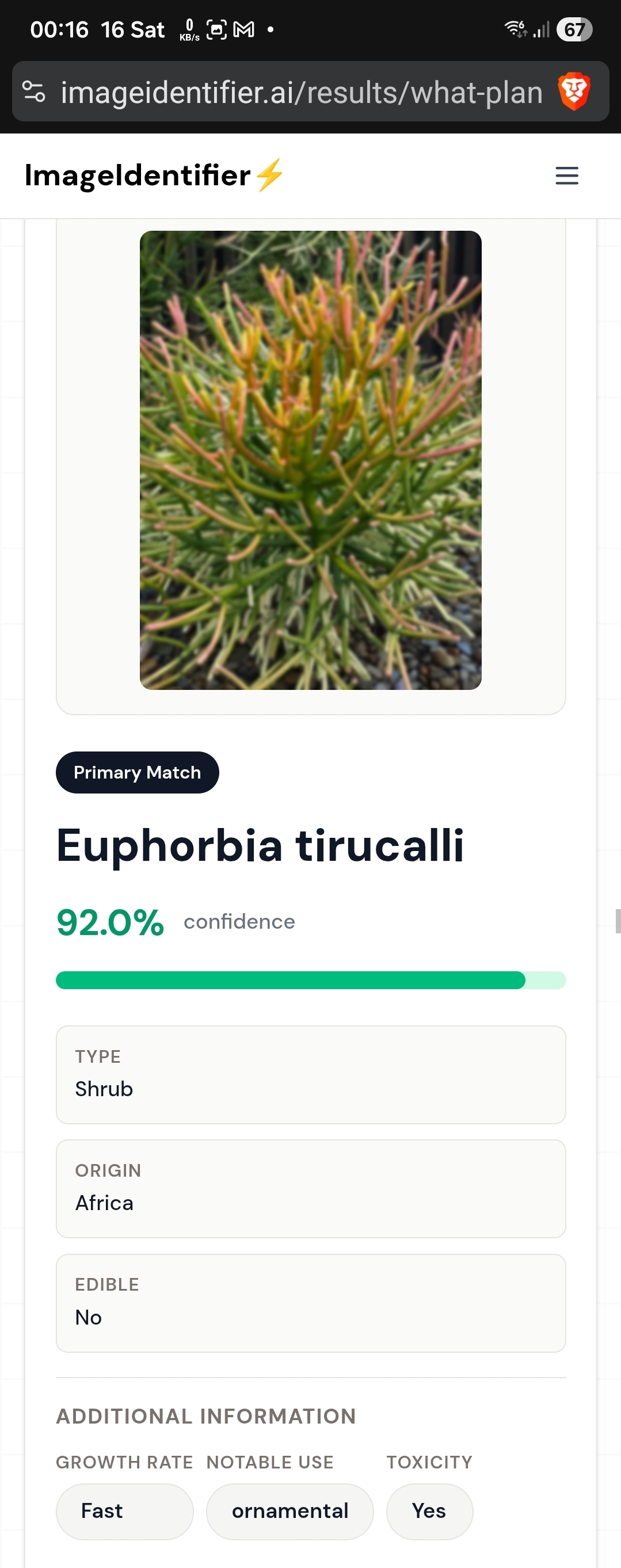
Euphorbia tirucalli, commonly called pencil cactus, firestick plant, or milk bush, is a striking succulent shrub native to arid regions of Africa and parts of Asia. It is best known for its thin, cylindrical, leafless stems that form dense, branching thickets. The stems are pencil like in appearance, usually green to yellow green, and they often take on fiery tones—orange, red, or pink—when exposed to bright sun or hot temperatures. The plant looks almost like a collection of green or colored sticks and can create a dramatic architectural feature in a garden or indoor space. In the landscape you may see it growing as a sprawling shrub or a tall, cane like tree; indoors it often remains smaller but still maintains a bold, sculptural form. A key feature is the milky latex that oozes from any cut or break in the plant, which is common in many Euphorbia species. That latex is caustic and can irritate skin and eyes, so handling should be with care and protective gloves is recommended. The leaves are either very small or absent, which is why the stems themselves are the visible ornament. The plant is evergreen and adapts to hot, dry conditions, but it is not frost tolerant and slows its growth in cooler seasons. Care and cultivation overview - Light and placement: Pencil cactus thrives in bright light and often performs best in full sun. It can tolerate some light shade, but intense, long lasting sun usually brings the most vivid stem color and denser branching. When grown indoors, place it near a sunny window. If your plant becomes leggy, it is a sign that it needs more light. - Temperature and climate: This plant prefers warm conditions and does not tolerate freezing. Aim for day temperatures roughly above 65 F (18 C) and keep it away from drafts and frost. In very hot climates the plant can handle high temperatures, but provide adequate sun exposure gradually to avoid sunburn on new growth. - Watering and soil: Euphorbia tirucalli is a drought tolerant succulent. Water deeply but infrequently, letting the soil dry out completely between waterings. Overwatering or prolonged wet soil can lead to root rot and other problems. In winter, reduce watering further because the plant rests. Use a well draining soil mix such as a cactus or succulent potting mix with added perlite or coarse sand to improve drainage and prevent moisture retention around the roots. - Soil pH and nutrients: A neutral to slightly acidic soil pH (around 6.0 to 7.5) is suitable. Fertilize sparingly during the growing season (spring through summer) with a balanced, diluted fertilizer (for example a 10-10-10 or 20-20-20 at 1/2 to 1/4 strength every 4 to 6 weeks). Do not fertilize in winter when growth is minimal. - Potting and repotting: Use a pot with good drainage and refresh potting mix every couple of years to prevent soil compaction and to check root health. If the plant becomes root bound, it is appropriate to move it to a slightly larger container. - Pruning and shaping: Light pruning can help control height and encourage branching, but take care to use clean shears and avoid wounding the plant unnecessarily. When cut, the latex will ooze out; avoid contact with skin and eyes. Prune during warm periods of the growing season for best recovery. Branches can be trained or wired into a desired shape if you want a more ornamental form, but always remove larger cuts with caution because the plant can exude a lot of latex. - Propagation: Propagation is commonly done from stem cuttings. Cut a healthy branch, allow the cut end to callous for several days to a week, then insert into a well draining mix (slightly damp, not wet) and keep in bright light. Root formation occurs in several weeks to a couple of months depending on conditions. Avoid injuring the plant or its latex during handling of cuttings. - Pests and diseases: This plant is relatively hardy but can be affected by pests such as mealybugs, scale, and spider mites. Keep an eye on the undersides of stems and new growth. Treat with insecticidal soap or horticultural oil if infestations appear. Root rot can occur if watering is excessive or the soil does not drain well; ensure proper drainage and reduce watering if signs of rot appear. - Toxicity and safety: All parts of Euphorbia tirucalli contain a milky latex that is caustic and can irritate skin, eyes, and mucous membranes. Ingestion is dangerous. Wear gloves when pruning or handling cuttings, and keep the plant away from children and pets. If latex contact occurs on skin or eyes, rinse immediately with plenty of water. If a large amount is ingested or if irritation persists, seek medical advice. - Uses and landscape value: The pencil cactus is valued for its sculptural form and drought tolerance. It is a popular choice in xeriscapes, modern and tropical style gardens, and contemporary indoor spaces where a striking architectural element is desired. When grown outdoors in warm climates, it can reach substantial height and form a dense, bristly canopy; as a container plant, it offers year round visual interest with minimal maintenance. - Growth rate and longevity: In optimal conditions, Euphorbia tirucalli grows steadily and can live for many years. Growth rates slow during cooler periods but recover quickly with warmth and light. Because the plant sheds older growth slowly and continuously new growth appears as slender shoots from the interior, the overall appearance remains airy and open rather than dense and leafy. - Special notes on invasiveness and regional considerations: In some regions outside its native range, Euphorbia tirucalli has the potential to become invasive or to escape cultivation. Always check local guidelines and avoid planting where it could spread into natural habitats. In areas with heavy frost or cold winds, provide winter protection or move container plants indoors. - Common names and recognition: Although called pencil cactus, it is not a true cactus. It belongs to the euphorbia family, which includes many succulents that share the drought tolerance and latex phenomenon. The bright color shift on the tips under high light is a hallmark of this species and helps identify it in mixed plantings. - Care summary for beginners: Start in bright light with a well draining soil, water sparingly, and avoid letting the soil stay wet. Use gloves when handling and pruning to avoid latex contact. If you are growing it indoors, provide as much light as possible and monitor humidity to prevent overly dry conditions that can stress the plant. - Practical tips: If you notice the plant becoming leggy, prune back some of the interior growth to encourage bushier branching. If a cutting is damaged, seal the cut to minimize latex loss and disease risk. When repotting, handle with care and use a clean container to minimize pest introduction. Regularly remove dust from stems to keep the plant looking vibrant and to help photosynthesis proceed efficiently. In sum, Euphorbia tirucalli is a dramatic, low maintenance succulent that offers architectural impact with relatively simple care. Its slender stems and potential for fiery coloration provide visual interest in warm climates and sunny interiors. However, its latex and toxic properties demand careful handling, and overwatering should be avoided to keep the plant healthy. With proper light, warmth, and a lean, well draining soil, the pencil cactus can thrive for many years as a standout feature in both outdoor and indoor settings.
Identification Time
May 15th, 2026
Notice
The function of Plantypia is using AI, so it may be inaccurate. Please use it for fun and reference only.