Oakleaf Hydrangea (Hydrangea quercifolia)
Description
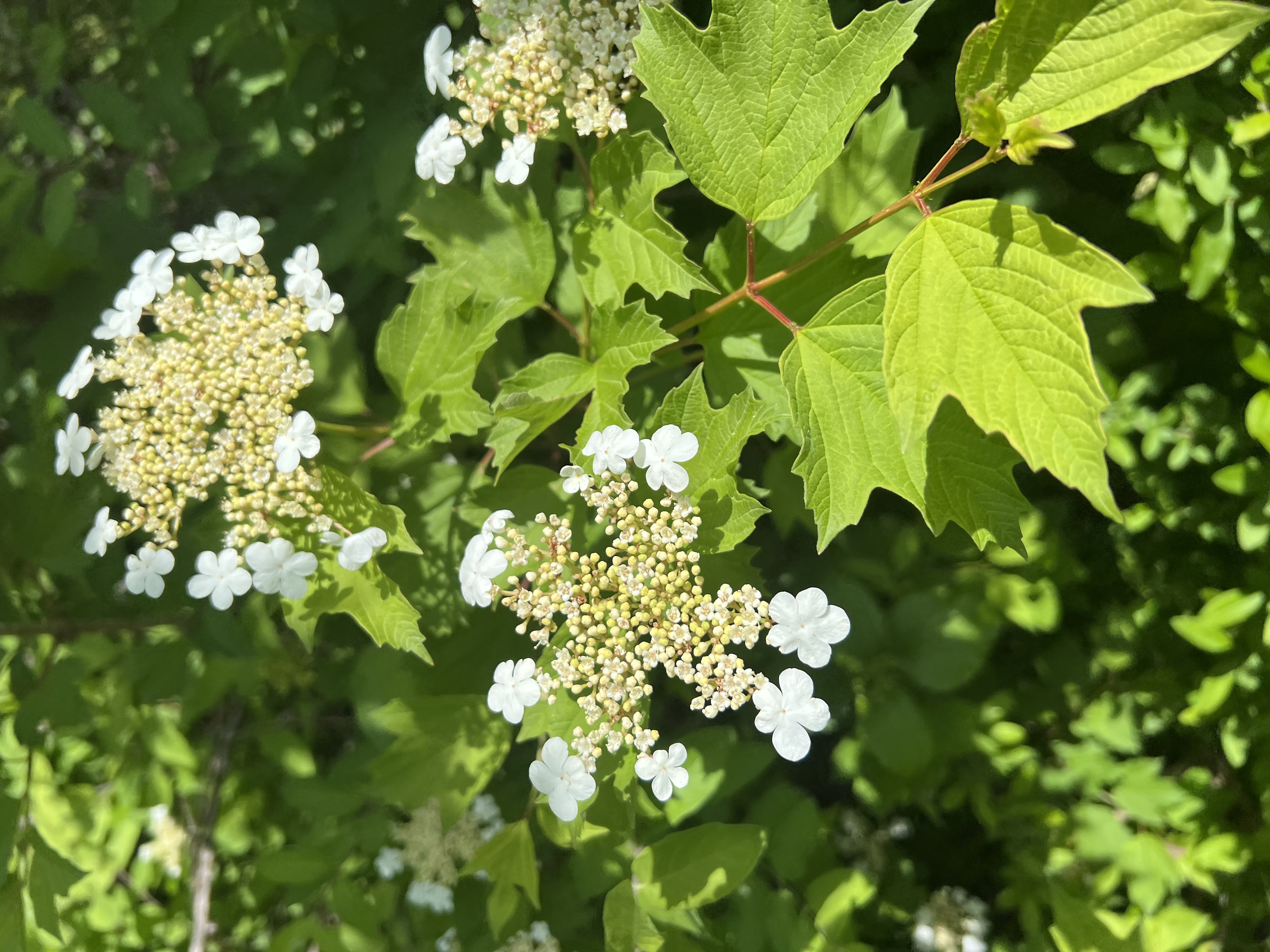
The plant in the photo appears to be an oakleaf hydrangea, Hydrangea quercifolia. This is a deciduous shrub prized for two striking features: its distinctive lobed leaves that resemble oak leaves, and the lacecap type flower heads that show a ring of larger, sterile white florets around a cluster of tiny fertile blooms. In the landscape, it gives a multilayered look year‑round: sculptural foliage in spring and summer, a dramatic white flower display in early summer, and often vibrant red, orange, or bronze tones in the fall. The overall habit is upright with arching branches, and on older plants the bark can be handsome, shedding in ribbons to reveal a cinnamon or grayish-character underlayer. It grows naturally in the southeastern United States, but in cultivated settings it has become a popular woodland or shade plant in many temperate gardens. Identification and description of distinguishing features - Leaves: The leaves are large, deeply lobed like an oak, with a rough texture and serrated margins. They are typically arranged alternately along the woody stems and can be quite showy in their fall color, turning rich burgundy or bronze before dropping. The leaf surface is often a bit fuzzy on new growth, giving a soft feel to the plant when it is leafing out in spring. - Flowers: In mid to late spring through early summer the plant produces a large, cone‑shaped panicle. The outer ring consists of several large sterile florets with four petal‑like sepals (often described as bracts), which create the lacecap effect. The center contains numerous tiny fertile florets that start greenish or yellowish and may fade as the bloom ages. In many cultivars the outer bracts age to pinkish tones as the center florets mature. - Size and form: Oakleaf hydrangea is a deciduous shrub that typically reaches about 6 to 8 feet tall and wide, though some cultivars stay a bit smaller or larger depending on pruning and site conditions. The branches can be sturdy and may arch gracefully, especially when supported by a rich, well‑drained planting site. - Bark and winter interest: As it matures, the stems reveal a textured, sometimes peeling bark that adds winter interest. The plant loses its leaves in fall, exposing the skeletal structure of the branches, which can be an attractive feature in a winter landscape. Natural habitat and climate suitability Oakleaf hydrangea is hardy in USDA zones 5 through 9, making it suitable for much of the eastern United States and other temperate regions with cold winters and warm summers. It prefers a cool, sheltered location with protection from strong, drying winds. In its native range it grows in woodland margins and forest edges where moisture and organic matter in the soil are abundant. In a garden, it performs best in part shade to full shade, although with sufficient moisture it can tolerate more sun, particularly in cooler climates. In hot, dry southern exposures a site with morning sun and afternoon shade helps protect both foliage and flower quality. Soil and moisture needs - Soil type: Oakleaf hydrangea thrives in rich, well‑drained soils that are high in organic matter. It tolerates a range of soil types, but it does best in loamy soils that retain moisture without becoming soggy. - pH: It tolerates a range of pH levels from acidic to slightly alkaline, though extremely alkaline conditions can reduce the intensity of bloom or affect overall vigor. - Moisture: Consistent moisture is important, especially for newly planted plants and during hot spells. Mulching helps conserve soil moisture and keep roots cool. Avoid letting the plant sit in standing water, which can lead to root rot. Cultural care and maintenance - Planting: When you plant an oakleaf hydrangea, set it at the same depth as it was in the container or nursery, with the rootball slightly above the surrounding soil to prevent crown saturation. Space plants enough for mature size (roughly 6–8 feet apart, though some cultivars are smaller or larger). - Watering: Water regularly during the first growing season to establish a deep, extensive root system. After establishment, water during prolonged dry spells. In general, aim for even soil moisture rather than allowing the soil to dry completely between waterings. - Mulching: Apply 2 to 4 inches of organic mulch (like shredded bark) around the root zone. Mulch helps preserve moisture, moderates soil temperature, and improves soil structure as it decomposes. Keep mulch a few inches away from the trunk to prevent rot. - Fertilization: Feed lightly in spring with a balanced, slow‑release fertilizer or compost. Avoid heavy, high‑nitrogen feeds, which can promote leaf growth at the expense of flowers and may encourage weak wood prone to winter damage. If soil is poor, a light top‑dressing of compost in spring is often beneficial. - Pruning and shaping: Oakleaf hydrangea blooms on old wood, meaning the flower buds for the following year form on wood from the previous season. Because of this, pruning is best done soon after flowering finishes in late spring to early summer. Remove any dead or damaged wood and selectively thin crowded branches to improve air circulation and light penetration. Heavy pruning or cutting back last year's wood can dramatically reduce next year’s bloom; therefore avoid hard pruning or hard shaping unless you want to slow or reset flowering. - Pest and disease management: Generally, oakleaf hydrangea is relatively pest‑resistant, but it can be bothered by aphids, scale, and spider mites in some conditions. Powdery mildew can occur in humid summers, particularly on crowded foliage. Ensure good air circulation, avoid overhead irrigation late in the day, and monitor for pests. If mildew appears, treat with appropriate horticultural oil or fungicide and improve airflow through pruning. - Winter care: In colder zones, protect the plant from harsh winter winds and extreme temperature fluctuations. A layer of mulch helps protect the shallow root zone. In late winter or early spring, remove any damaged wood and tidy the plant to encourage new growth in the season ahead. Propagation and cultivar notes Oakleaf hydrangea is commonly propagated by softwood or semi‑hardwood cuttings taken in late spring or early summer, or by layering. Layering involves bending a flexible low‑growing stem to the ground, covering a portion with soil while still attached to the parent plant, and allowing roots to form before separation. This method tends to yield plants that naturally match the parent in growth habit and bloom potential. Many cultivars have been selected for their leaf shape, autumn color, or flower size and bract brightness. Fall color ranges from burgundy to orange to bronze, adding seasonal interest even after flowering has ended. Garden use and ornamental value - Landscape role: Oakleaf hydrangea works brilliantly as a specimen plant or as a focal point in a shade garden. Its dramatic autumn foliage and graceful bloom heads make it a reliable backdrop for woodland plantings such as ferns, hostas, and perennials that prefer similar moisture and light conditions. - Design tips: Plant in partial shade near a path or seating area where the flowers and foliage can be admired up close. Use it near a foundation or under deciduous trees to let summer shade keep the plant cool. For a layered look, plant with taller shrubs behind and shorter perennials in front to highlight both foliage and flowers. - Pairing ideas: Pair with early‑season bloomers for continuous interest, or combine with evergreen accents to maintain structure in winter. The bark and branching pattern provide texture even in leafless months, so it can be part of a year‑round composition. Common concerns and troubleshooting - Blooming issues: If you see reduced blooms, consider whether you pruned too aggressively after a previous flowering season. Remember that the plant forms most of its flower buds on old wood, so late pruning can shorten the next season’s display. - Leaf scorch or sun damage: In very sunny, hot sites, leaves may scorch at the edges. Ensure adequate moisture and provide afternoon shade if heat stress appears. - Soil problems: Very poor drainage or waterlogged soils can lead to root rot and poor performance. Improve drainage and consider raised beds or amended soil if drainage is an issue. - Pests and diseases: Watch for aphids, scale, and powdery mildew under humid conditions. Regular inspection and appropriate treatment will usually keep problems under control. In sum Oakleaf hydrangea is a robust, visually striking shrub that blends well into shaded or woodland garden settings. Its combination of architectural foliage, lacecap flowers, and seasonal color transitions makes it a standout choice for gardeners seeking a plant with multi‑season appeal and relatively easy care. By providing the right light, moisture, and pruning timing, you can enjoy years of graceful growth, dramatic floral displays, and a lush, textured presence in your landscape.
Identification Time
May 9th, 2026
Notice
The function of Plantypia is using AI, so it may be inaccurate. Please use it for fun and reference only.