Epimedium (bishop's hat, barrenwort)
Description
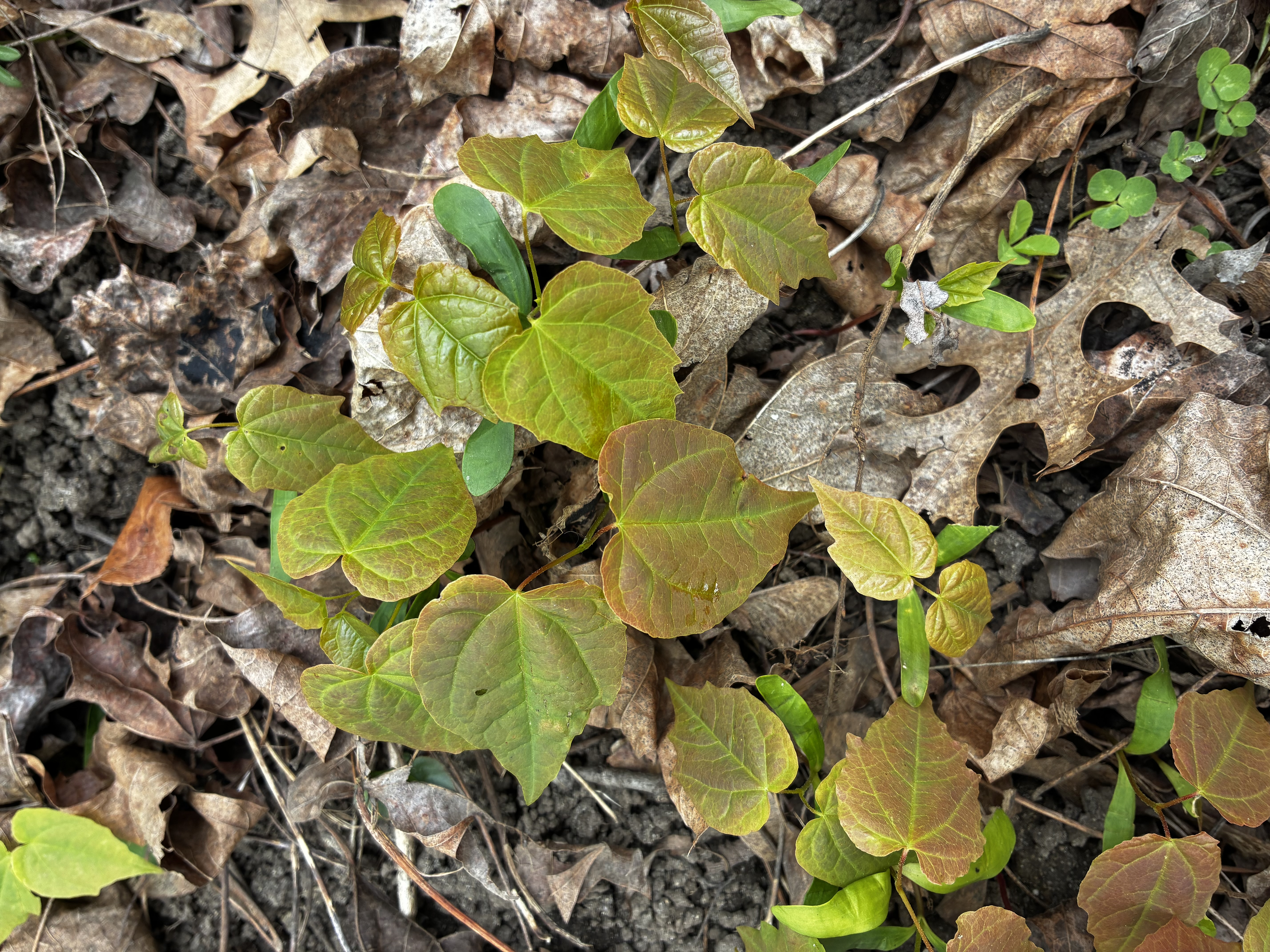
The plant in the photo most closely resembles Epimedium, commonly called bishop's hat or barrenwort. This is a low-growing, herbaceous perennial that forms a delicate, evergreen to semi-evergreen carpet in shade gardens. Its most recognizable feature is the foliage: small, heart-shaped or cordate leaves that arise on slender petioles from creeping rhizomes. In spring, new growth often appears bright green and can take on a coppery or bronze tinge as cooler weather arrives; as the season moves into full warmth, the leaves typically settle into a rich green color, sometimes with hints of red along the margins. In many climates the foliage persists through the winter, though it may look tattered or lose some of its color in very cold spells. The overall habit is a slow, steady spread that can cover several square feet over a few years, making Epimedium a popular groundcover for shade and woodland garden settings. Leaves and form: Each leaf blade is usually small (about 1.5–3 cm across) and is often heart-shaped with a smooth or subtly wavy margin. The venation is clear, with a strong midrib and lateral veins that create a slightly quilted appearance on close inspection. Many Epimedium cultivars display a pair of leaflets or a compound leaf at the tip of a slender stalk, giving the impression of a delicate, airy rosette emerging from the soil. The plant produces slender flowering stems that rise above the foliage in spring, bearing small, arching flowers with spurred petals. Flower color varies by cultivar, including yellows, pinks, whites, and sometimes orange tones, often with a delicate, intricate shape that is more appreciated up close than from a distance. Cultural needs and care: - Light: Epimedium thrives best in partial to full shade. It is well suited for woodland gardens, under deciduous trees, or in the shadier margins of borders. Some cultivars tolerate dappled sun, but too much strong sun, especially in hot climates, can scorch the leaves and fade color. - Soil: It prefers deep, fertile, humus-rich soil with excellent drainage. A loamy soil that retains some moisture but does not become waterlogged is ideal. Incorporating organic matter such as compost improves texture and nutrient availability. Slightly acidic to neutral pH is common for many Epimediums, though they can tolerate a range. - Water: Regular moisture is important while establishing, but Epimedium does not like to sit in wet soil. Keep the root zone evenly moist, particularly during dry spells, but allow the top layer of soil to dry out slightly between waterings to prevent root rot. - Mulching and temperature: A layer of mulch (leaf mold, pine bark, or compost) helps maintain moisture and keeps roots cool during hot periods. In colder climates, the foliage may die back to the crown; however, the plant often regrows from the crown in spring. In zones 5–9, many Epimediums are reliably hardy, though extreme conditions can affect growth. - Feeding: Apply a balanced, slow-release fertilizer or organic compost in spring as new growth begins. Avoid heavy nitrogen applications, which can promote lush top growth at the expense of flowering and overall hardiness. - Pruning and maintenance: Remove spent flower stalks after blooming to keep a neat appearance. In late winter or early spring, trim away any old or damaged foliage to make way for new growth. If clumps become dense or thinned with age, rejuvenate by dividing in early spring or fall. Division also helps maintain vigor and spread control. - Propagation: Division is the most reliable method, typically done in spring or fall when the plant is not actively flowering. Separate rhizome sections with a few shoots and replant at the same depth as before. Seed propagation is possible but slow and may result in plants that differ from the parent. Care through the seasons: - Spring: New growth appears; flowers emerge on slender stalks above the foliage. It’s a good time to divide if clumps are crowded. - Summer: Maintain moisture during warm, dry periods. Light shading can help protect leaves from sun scorch in hotter regions. - Fall: Foliage often takes on bronze, copper, or red tones, adding seasonal color to shade borders. This is a good time to apply a light mulch and monitor moisture as temperatures change. - Winter: In milder climates, evergreen or semi-evergreen leaves provide year-round texture. In colder zones, above-ground foliage may die back, but crowns usually survive, and new leaves emerge in spring. Pests, diseases, and problems: - Pests: Slugs and snails can nibble on new growth and tender foliage, particularly in damp, sheltered spots. Monitor and manage as needed. - Diseases: Epimedium is relatively disease-resistant but can suffer from powdery mildew in very humid, poorly ventilated sites. Ensure good air circulation and avoid overhead watering to minimize risk. - Tolerance and problems: Poor drainage, heavy clay, or poorly lit, overly dry sites can reduce vigor. Excessive sun can scorch foliage, while very hot, dry climates may slow growth unless consistently watered. Benefits and garden uses: - Visual appeal: Epimedium provides year-round interest with its delicate, heart-shaped leaves and spring flowers. The foliage can glow bronze or copper in fall/winter, offering color even when many shade plants are dormant. - Groundcover: Its creeping rhizomes form a low, dense mat that helps suppress weeds in shady areas. It pairs well with ferns, hostas, hellebores, and other woodland understory plants. - Versatility: Ideal for under trees, along the shaded edges of paths, rock gardens, or in front of larger perennials where its low height won’t compete with taller plants. Common cautions and notes: - Plant selection: Since Epimedium has many cultivars with slightly different growth habits and color shifts, choose a cultivar that matches your climate and light conditions. If you want evergreen foliage in milder winters, select cultivars known for retaining leaves in your region. - Colder climates: In zones where winter temperatures reach deeply below freezing, some foliage may die back; this is normal for many Epimediums, and new growth generally reemerges in spring. - Invasiveness: Epimedium is not considered invasive in most garden settings. It spreads gradually via rhizomes and is easy to contain with regular division or by planting in a defined bed edge. Why this plant fits the photo: - The photo shows small, cordate (heart-shaped) leaves with clear venation, emerging close to the ground in a dense, low-growing habit. The leaves appear to be turning bronze in some parts of the plant, which is a common fall/winter coloration for Epimedium. The habitat—a shaded, leaf-littered location—matches typical Epimedium habitat in woodland gardens. While it’s always possible that a very similar-looking species exists, Epimedium remains the most plausible identification given these characteristics. Bottom line: - If you’re looking for a graceful, shade-t-loving groundcover with attractive foliage that provides winter interest, Epimedium is a strong candidate. It’s relatively low-maintenance, rewards patience with slow but steady spread, and offers the added bonus of delicate spring flowers. Proper site selection (partial to full shade, rich, well-drained soil) and mindful maintenance (mulching, occasional division, and careful watering) will help this plant thrive year after year. If the plant is not evergreen in your region, you’ll still appreciate the way its leaves emerge bronzed in spring, then green, and finally bronze again in fall, creating a subtle, decorative tapestry under trees and in shade borders.
Identification Time
April 29th, 2026
Notice
The function of Plantypia is using AI, so it may be inaccurate. Please use it for fun and reference only.