Diagnosis Result
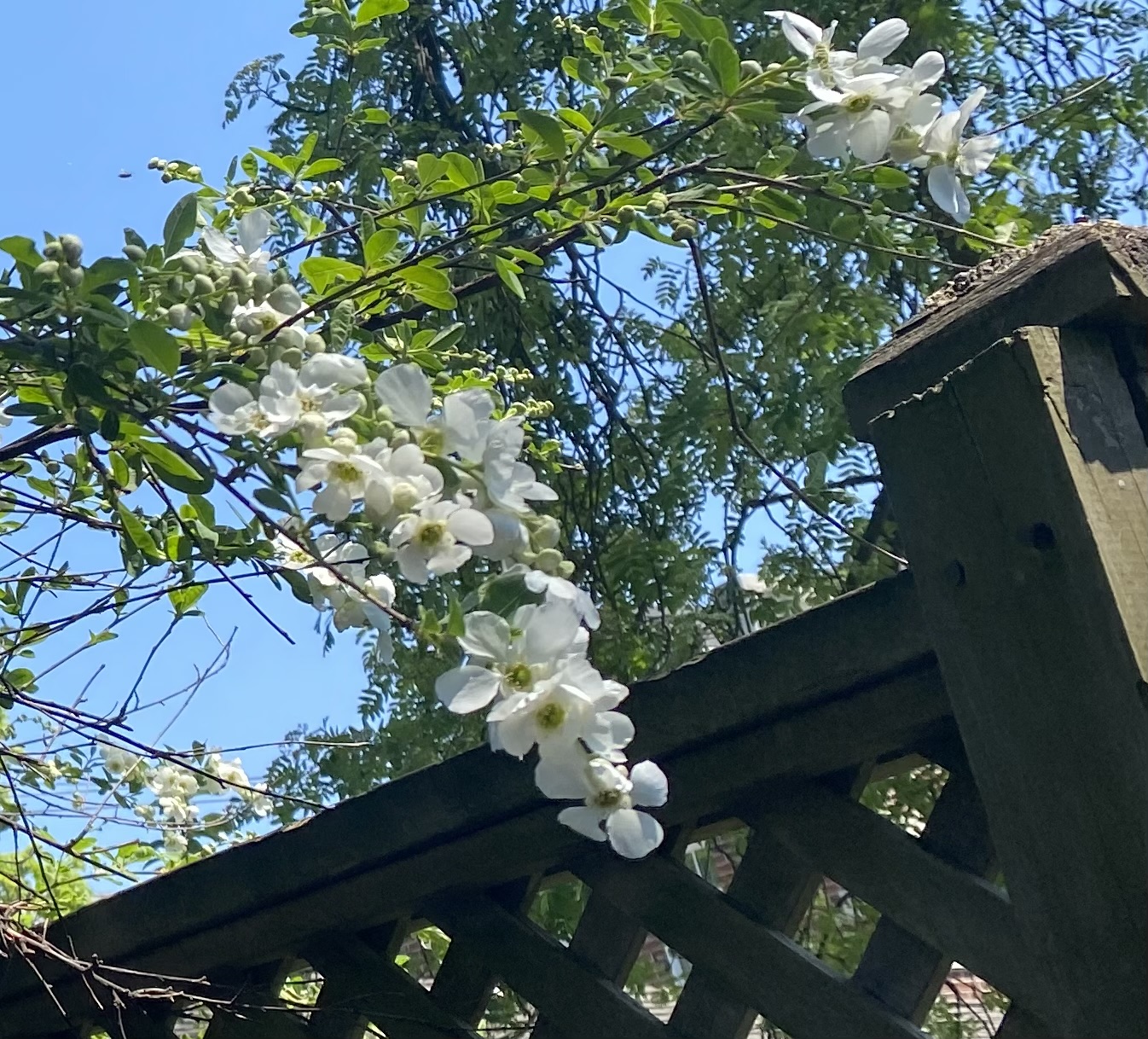
Description
The plant in the image appears to be a flowering shrub or trained vine with abundant white blossoms arranged along arching racemes. The leaves are small, opposite, and glossy green with a smooth margin or very fine serration. The flowers are white, five-petaled, with a pale yellow center, and there are many buds along the stems. At a glance, there are no obvious signs of common diseases (no leaf spots, no powdery mildew, no cankers, no downy growth on foliage, no defoliation) and no visible pest damage (no stippling, no honeydew, no scale or aphids clusters). The plant seems well hydrated and receives ample sunlight, both favorable conditions for this type of flowering shrub. Therefore, the current appearance suggests a healthy plant rather than an active disease instance. The following long-form guidance focuses on maintenance and prevention to preserve health and minimize risk of future problems.
Solution
3. Seasonal resilience planning and long-term sustainability for ongoing vigor. To ensure the plant remains resilient across variable weather and changing conditions, develop a long-term health plan that emphasizes soil health, structural maintenance, and habitat support. Start with soil testing every few years to determine pH and nutrient status; adjust with amendments to keep the soil in the preferred range for your plant (for many flowering shrubs, a slightly acidic to neutral pH improves nutrient availability and bloom performance). Cultivate organic matter by applying compost or well-rotted mulch annually, which improves soil structure, supports beneficial organisms, and reduces drought stress during hot spells. In terms of structural care, trained vines or shrubs on trellises need regular structural checks: inspect supports for signs of wear or movement after storms; prune to maintain the shape and to prevent crowding that reduces air flow and increases disease risk. Manage irrigation by installing a simple drip system or soaker hose that delivers water directly to the root zone, reducing foliage wetness and fungal risk. During dormant periods, consider a light pruning to remove dead wood and to stimulate vigorous growth next season; never prune in a way that leaves large bare sections susceptible to sunscald. Finally, encourage biodiversity around the planting area by keeping a mix of flowering plants that attract pollinators and beneficial insects, which supports natural pest suppression. This holistic plan—soil health, structural integrity, precise irrigation, and ecological balance—helps maintain vigor, optimize blooming, and reduce the likelihood of disease and pest problems in the long term.
Notice
The function of Plantypia is using AI, so it may be inaccurate. Please use it for fun and reference only.